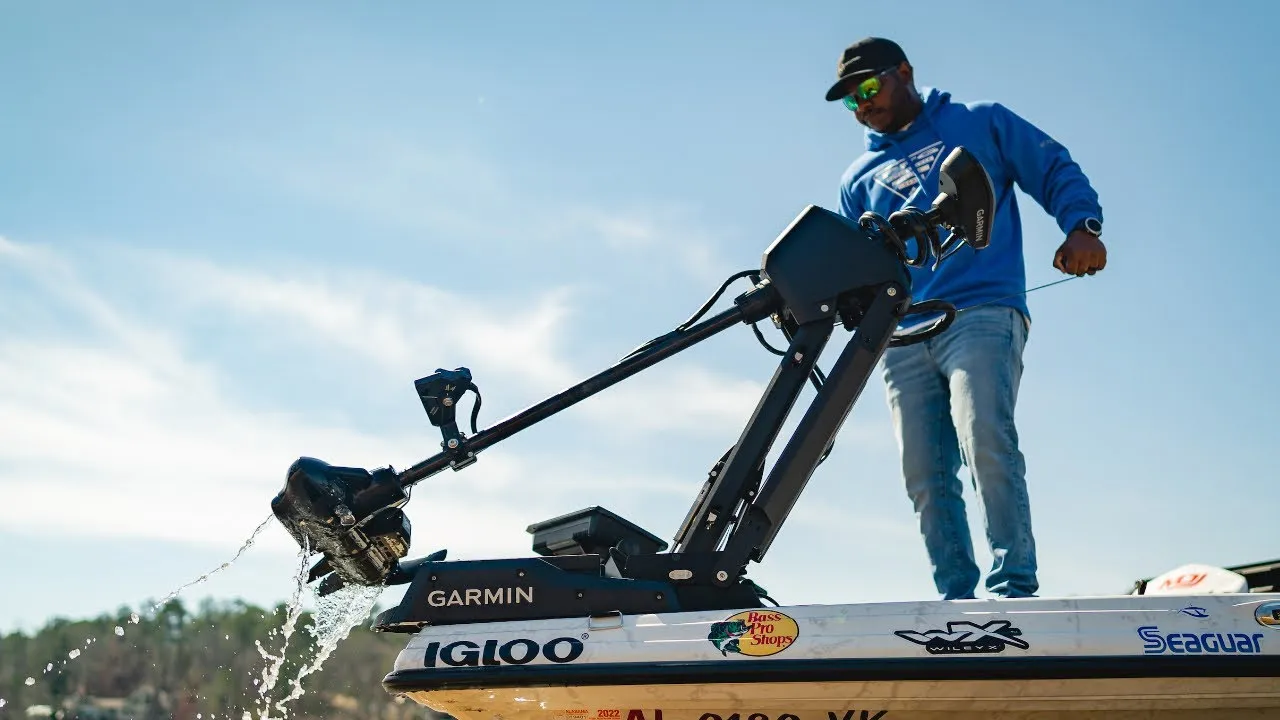
Trolling Motor
Fishing is one of the most widely practised leisure and economic activity. A successful fishing
experience often relies on your fishing gear and accessories. A trolling motor is one of the most
important accessories a fisherman can have on their boat, especially when fishing on inland
waters.
Trolling motors are electricity-powered drivers that help a fisherman navigate waters with
minimal noise and disturbance. Having quality trolling motors, like the Minn Kota, ensures you
avoid frequent replacement and hectic maintenance procedures, at the same time offering you efficiency and sufficient driving power. Minn Kota parts are affordable and easily accessible, easing the concerns of constant trolling motor replacement.
Despite having a primary outboard engine driving the boat, installing a trolling motor comes in
handy. Here are some of the reasons why you need to have a trolling motor on your boat;
Stealth Movement
Fish are easily spooked by noise and sudden movements. Outboard engines are very loud and
displace large volumes of water in order for the boat to move. Kicker engines mounted below
the outboard engine produce a lot of vibration in the water, scaring off fish. Approaching shoals
of fish requires the boat to creep with minimal water displacement, making it easier to navigate
a wide area and improving the chances of having a bountiful catch. Trolling motors are
equipped with brushless motors that produce little noise. As a result, the rotor produces thrust
with reduced vibration.
Straightening the Boat
A trolling motor not only drives the boat silently but also straightens its navigation. Water
waves hitting the boat may veer off-course, riding in the wrong direction. Straightening can be
done automatically by mounting the motor close to the bow or manually by maintaining a slight
mounting misalignment at an angle. The motor also keeps the boat in one specific position
when the wind and currents change direction.
Powering the Boat
Boats have outboard diesel or petrol engines as their primary source of power. In some regions,
especially inland lakes with many government regulations on pollution, electric trolling motors
are used instead of traditional outboard engines.
Trolling motors can also be used as a secondary power source for the boat when the primary
engine fails. The boat may drive for a few hours depending on the power of the motor, weight
of the boat, power output of the battery, and total imposed load of the catch, which should be
enough to get ashore safely.
Precise Positioning
Advancement in technology has seen improvement in the efficiency and controllability of
trolling motors. Initially, trolling motor control was done by rocking pedals by foot. Modern
motors come equipped with GPS which allows the fisherman to set his fishing point precisely.
GPS also enables the boat to automatically adjust its speed, position and angle as wind and
current direction (and magnitude) change.
Autopilot Navigation
Some trolling motors, like the Minn Kota, have autopilot systems installed in them. Self-
navigation and driving enabled by the spot-lock feature in the motor's GPS allows you to put
more effort and concentration into fishing. The remote control features are still incorporated in
the motor for those who prefer manual control.
Conclusion
Despite outboard engines being the primary source of driving power in a boat, a trolling motor
is still a vital equipment. Motors come in different sizes, each tailored to meet the power
requirements of every specific boat. Compatible with varying types of boats, the trolling motor
is a handy tool that not only helps in navigation but also serves as a secondary driving power
source. Damages and repairs are part of the life cycle of the motors; thus, maintenance cost,
availability of spare parts, life expectancy and energy efficiency are some of the critical factors
every fishing enthusiast before purchasing the trolling motor.