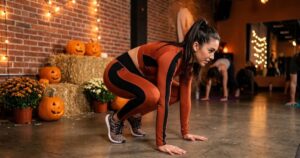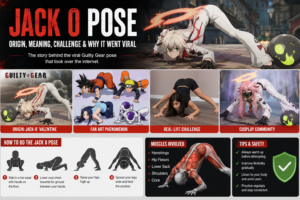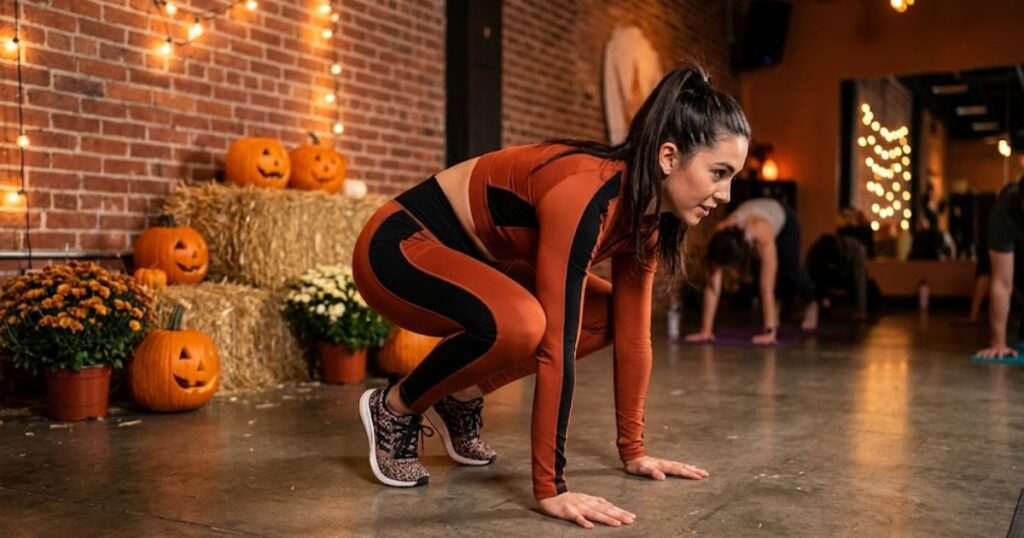
If you’ve scrolled through TikTok lately, you’ve probably seen someone drop into a dramatic backbend-meets-split shape and caption it “jack o pose.” It looks impressive, a little intimidating, and honestly kind of fun. But what is it, where did it come from, and can a regular person actually work toward it?
This guide breaks down everything you need to know about the jack o pose — its origin, the flexibility it demands, a safe way to build toward it, and the mistakes to avoid. Whether you’re a curious beginner or a flexibility enthusiast chasing your next challenge, you’ll walk away with a clear, realistic plan.
What Is the Jack-O Pose?
The jack o pose is a viral flexibility challenge, not a traditional or ancient yoga posture. It combines elements of a deep backbend with a wide-leg split, creating a striking silhouette that photographs and films well. That visual drama is exactly why it spread so fast across short-form video platforms.
Unlike classic yoga asanas with centuries of history and Sanskrit names, the jack o pose is a modern internet phenomenon. It borrows its shape and its name from pop culture rather than a yoga lineage, which matters if you’re searching for its “official” benefits or anatomical classification — there isn’t one in traditional yoga texts.
Where the Name Comes From
The jack o pose takes its name from Jack-O’ Valentine, a character from the fighting game Guilty Gear Strive. Fans and content creators noticed the character’s signature stance resembled an extreme flexibility pose, and the comparison stuck. From there, flexibility creators and anime fans on TikTok turned it into a full-blown challenge.
Gamers, gymnasts, and yoga practitioners all started posting their own versions, tagging videos with #JackOPose and #JackOChallenge. That crossover between gaming culture and fitness content is a big part of why the trend has such staying power online.
Why the Jack-O Pose Went Viral
Trends like the jack o pose spread because they sit at the intersection of a few things people already love: flexibility challenges, anime and gaming references, and short, satisfying video content. It gives creators a clear before-and-after moment, which performs well on algorithm-driven platforms.
It also taps into a broader wave of “flexibility challenge” content, alongside splits challenges and backbend progressions. People enjoy tracking visible progress, and a pose this dramatic makes for a compelling milestone. That combination of novelty, community, and measurable progress keeps the trend alive.
What It Takes to Attempt the Jack-O Pose
Before attempting the jack o pose, it helps to understand the physical demands honestly. This isn’t a beginner move, and rushing into it is one of the fastest ways to get hurt. Realistic expectations make the process far safer and more enjoyable.
Flexibility and Strength Requirements
The pose generally requires a mix of the following:
- Hip flexor and hamstring flexibility — for the wide leg positioning
- Spinal mobility — for the backbend component
- Shoulder and chest openness — to support the upper body angle
- Core strength — to control the movement instead of collapsing into it
- Balance and body awareness — to distribute weight safely
Most people don’t arrive with all five already in place, which is completely normal. Building them gradually is the realistic path, not a weekend project.
How to Work Toward the Jack-O Pose (Step-by-Step)
Rather than jumping straight into the full shape, work through progressive steps that build the necessary range of motion and strength.
- Warm up thoroughly with 5–10 minutes of light cardio to raise your core temperature.
- Practice hip openers like lizard pose or frog stretch for 2–3 minutes each side.
- Work on backbend prep using bridge pose, then progress to wheel pose if you have the mobility.
- Add split-focused stretches such as half-splits, holding for 30–60 seconds per side.
- Combine elements slowly, testing a partial version of the shape with support (a wall or a partner spotting you).
- Cool down with gentle forward folds and spinal twists to release tension.
Repeat this sequence consistently, three to four times a week, rather than attempting the full pose cold. Flexibility gains come from repetition over time, not a single intense session.
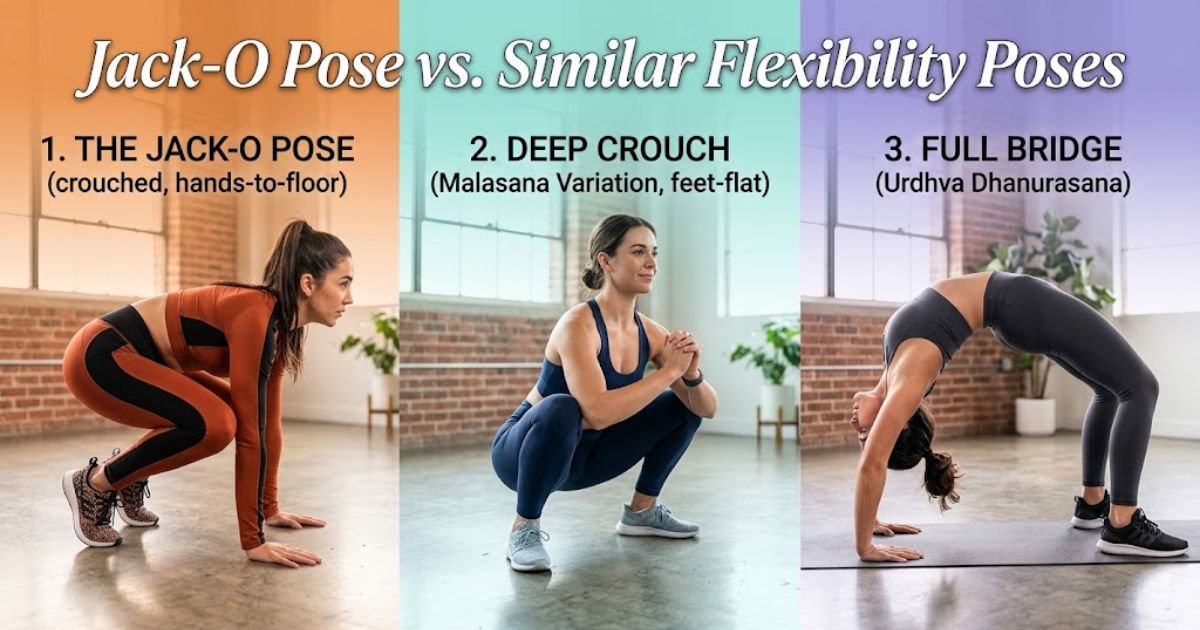
Jack-O Pose vs. Similar Flexibility Poses
Comparing the jack o pose to more established flexibility shapes helps put its difficulty into context.
| Pose | Primary Requirement | Difficulty Level | Traditional Yoga Pose? |
|---|---|---|---|
| Jack-O Pose | Combined backbend + split | Advanced | No — internet trend |
| Full Split (Hanumanasana) | Hip and hamstring flexibility | Intermediate–Advanced | Yes |
| Wheel Pose (Chakrasana) | Spinal and shoulder mobility | Intermediate–Advanced | Yes |
| Scorpion Pose | Backbend + inversion balance | Advanced | Yes (modern variation) |
As the table shows, the jack o pose essentially layers two advanced flexibility skills on top of each other, which is why it looks so striking — and why it takes real preparation.
Beginner-Friendly Prep Stretches
Use this table to structure a simple weekly prep routine before attempting anything close to the full pose.
| Stretch | Target Area | Suggested Hold Time |
|---|---|---|
| Low lunge with backbend | Hip flexors, quads | 30 seconds/side |
| Half-split | Hamstrings | 45 seconds/side |
| Cobra to bridge flow | Spine, chest | 5–8 slow reps |
| Butterfly stretch | Inner thighs, hips | 60 seconds |
| Cat-cow | Spinal mobility | 8–10 reps |
Quick beginner checklist before attempting the jack o pose:
- I can comfortably hold a half-split on both sides
- I can perform bridge pose without wrist or lower-back pain
- My shoulders can reach overhead without pinching
- I’ve warmed up for at least 10 minutes
- I have a spotter, wall, or soft surface nearby
If you can’t check every box yet, that’s a sign to keep building rather than push into the full shape.
Common Mistakes and Safety Tips
Many injuries from trends like the jack o pose come from skipping preparation rather than the pose itself being inherently dangerous. Respecting your current range of motion protects your joints and your progress.
A few common mistakes to avoid:
- Skipping the warm-up and going straight into deep stretching
- Forcing the backbend from the lower back instead of the upper spine
- Comparing your flexibility timeline to someone else’s video
- Practicing on a hard, slippery, or cluttered surface
Injuries to Watch For
Overextending the lower back and straining the hamstrings are the two most common issues reported with this kind of combined pose. If you feel sharp, pinching, or shooting pain — as opposed to a normal stretching sensation — stop immediately and ease out of the position. Working with a certified yoga or flexibility coach can help you progress safely, especially if you have any existing back or hip conditions.
Conclusion
The jack o pose is a fun, visually striking flexibility challenge with roots in gaming culture rather than traditional yoga. Getting there safely takes honest preparation: building hip and hamstring flexibility, spinal mobility, and core control before attempting the full shape. Approach it as a gradual project, use the prep stretches and checklist above, and listen to your body along the way. With consistent practice, the jack o pose becomes less about the trend and more about genuine, hard-earned flexibility.
FAQs
Is the jack o pose a real yoga pose?
No. It’s a modern internet flexibility challenge named after a video game character, not a traditional yoga asana with a Sanskrit name or historical lineage.
How long does it take to achieve the jack o pose?
It varies widely by starting flexibility, but most people building from scratch need several weeks to a few months of consistent stretching before attempting the full shape safely.
Do I need to be a dancer or gymnast to do it?
No, but prior dance, gymnastics, or yoga experience gives you a flexibility and body-awareness head start. Anyone can work toward it with consistent practice.
Can beginners get hurt trying the jack o pose?
Yes, especially if they skip warm-ups or force the position without adequate hip and spinal mobility. Progressive prep stretches significantly lower that risk.
What muscles does the jack o pose stretch?
It primarily targets the hip flexors, hamstrings, spinal extensors, shoulders, and chest, while also demanding core strength to control the position.