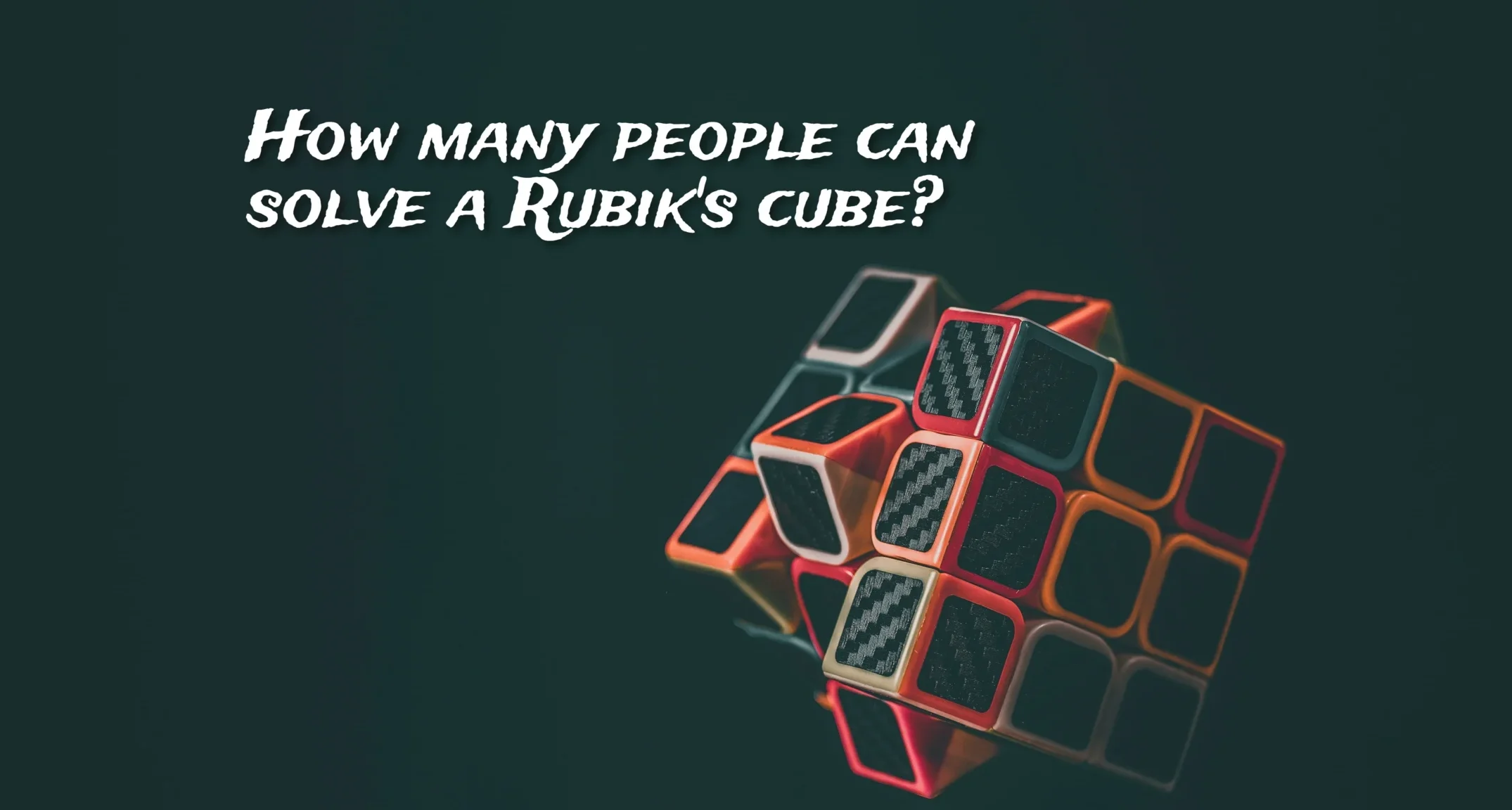
Solving a Rubik’s Cube is a feat that has fascinated and challenged people for decades. But just how many individuals can crack the colorful puzzle? Let’s delve into the world of Rubik’s Cubes and uncover the numbers behind this enigmatic challenge.
Understanding the Rubik’s Cube
Basics of the Rubik’s Cube
The Rubik’s Cube is a 3D combination puzzle invented by Hungarian architect Ernő Rubik in 1974. It consists of 26 smaller colored cubes arranged in a 3x3x3 grid, with each face featuring one of six colors: red, blue, green, orange, yellow, and white.
Benefits of Solving a Rubik’s Cube
Solving a Rubik’s Cube offers many benefits beyond the simple satisfaction of completing the puzzle.
Mental Benefits
Mentally, solving a Rubik’s Cube can improve critical thinking skills, spatial awareness, and problem-solving abilities. It requires logical reasoning and strategic planning to maneuver the colored blocks into their correct positions.
Emotional Benefits
The sense of accomplishment and pride that comes with solving a Rubik’s Cube can boost self-esteem and confidence. It’s a tangible reminder that perseverance and patience yield results that can be applied to other challenges in life.
Cognitive Benefits
Cognitively, tackling a Rubik’s Cube engages the brain’s left and right hemispheres, stimulating neural pathways and fostering creativity. It enhances memory retention and cognitive flexibility, which improves overall brain health.
Learning to Solve a Rubik’s Cube
Methods and Techniques
There are various methods and techniques for solving a Rubik’s Cube, ranging from beginner-friendly approaches to advanced algorithms used by speedcubers. Popular methods include the Layer-by-Layer, CFOP (Cross, F2L, OLL, PLL), and Roux.
Step-by-Step Guide
For beginners, mastering the Rubik’s Cube starts with understanding the basic notation and moves, followed by learning a systematic approach to solving each layer. Practice and repetition are crucial to improving solving times and mastering more advanced techniques.

Common Challenges
Frustrations and Roadblocks
Many beginners need help with frustrations and roadblocks when solving a Rubik’s Cube. It can be overwhelming to memorize algorithms and navigate complex sequences of moves. Additionally, the fear of making mistakes or messing up progress can hinder progress.
Overcoming Challenges
Persistence and Practice
Persistence and practice are the keys to overcoming challenges in solving a Rubik’s Cube. Break down the solving process into manageable steps, celebrate small victories, and embrace mistakes as learning opportunities. With dedication and determination, even the most daunting challenges can be conquered.
Community and Resources
Online Communities
Joining online communities and forums dedicated to Rubik’s Cube enthusiasts can provide valuable support, encouragement, and resources. These communities offer tips, tricks, troubleshooting advice, and opportunities to connect with fellow cubers worldwide.
Tutorials and Guides
Plenty of online tutorials, guides, and instructional videos help aspiring Cubers improve their skills. From beginner tutorials to advanced speedcubing techniques, there’s something for every skill level and learning style.
Conclusion
In conclusion, the number of people who can solve a Rubik’s Cube varies widely depending on factors such as dedication, practice, and natural aptitude. While it may seem daunting, anyone can learn to solve a Rubik’s Cube with patience, persistence, and the right resources. So, why not join the millions of people worldwide who have mastered this iconic puzzle?
FAQs
1. Is it challenging to learn to solve a Rubik’s Cube?
Learning to solve a Rubik’s Cube can be challenging at first, but with practice and dedication, anyone can master it.
2. How long does it take to solve a Rubik’s Cube?
The time it takes to solve a Rubik’s Cube varies depending on individual skill level and the method used. Beginners may take several minutes, while advanced cubers can solve it in seconds.
3. Are there competitions for Rubik’s Cube solving?
Rubik’s Cube-solving competitions are held worldwide, from casual events to official World Cube Association competitions.
4. Can solving the Rubik’s Cube improve cognitive abilities?
Solving the Rubik’s Cube has improved cognitive abilities such as critical thinking, spatial awareness, and memory retention.
5. Is there a specific age range for learning to solve a Rubik’s Cube?
No, people of all ages can learn to solve a Rubik’s Cube. It’s always possible to start!