
Car accidents are like the unwanted gifts that keep on giving; but instead of ugly sweaters or fruitcakes, they leave behind an assortment of long-term effects that are far from delightful and require lawyers for a car accident case in order to get compensation. Victims may find themselves dealing not just with a dented bumper but with a body that’s decided to go rogue with chronic pain, stiffness, and an aversion to doing the electric slide at family weddings. They’re often subtle at first – a twinge here, a wobble there – but these symptoms can stick around like the last guests at a party, refusing to take a hint.
As time ticks on, the aftermath of automotive tumbles can turn into a laundry list of ailments that sound like the side effects of a dubious infomercial product. Some people might grapple with memory issues that make them forget what they walked into a room for, or cognitive hiccups that swap their mental arithmetic prowess for the inability to calculate a tip. Others might find their balance and coordination thrown off, making them zigzag down the street as if they’re auditioning for a role in ‘Zombies on Ice.’
In short, the legacy of a car crash often lingers far longer than the initial shock and awe, leaving individuals to navigate a minefield of physical and psychological challenges. They’re the changes that make you appreciate the full value of seat belts and traffic laws – and perhaps the occasional bubble wrap suit for those particularly accident-prone days.
Physiological Aftermath of Auto Accidents
Auto accidents can turn bones to puzzles and muscles to mush, while potentially zapping nerves and wrenching spines into unhappy epics. Now let’s unpack these tales of resilience and recovery.
Bone and Muscle Mayhem
A car accident’s impact doesn’t shy away from dealing a shattering blow to bones, causing everything from straightforward broken bones to compound fractures that would make MacGyver clutch his Swiss Army knife in despair. Even when they get pieced back together, the souvenir can be a bout of chronic back pain or a stiff neck injury that stays longer than the most tenacious of outlaws.
- Broken Bones: Often requiring casts or, in dramatic fashion, a surgical rendezvous complete with stainless-steel hardware.
- Soft Tissue Injuries: Such as sprains, strains, and the ever-annoying whiplash—the party crasher of many post-accident injury shindigs.
Nervy Narratives and Spinal Sagas
Along come the spine-chilling tales of the spinal cord, where the words ‘nerve damage’ can spark more fear than a cliffhanger season finale. And back injuries? They could be the main plot, adding a twist of limited mobility and a dose of daily pain that’s more nagging than a cliff’s edge.
- Spinal Cord Injuries & Nerve Damage: Can lead one to a riveting journey through physical therapy or the grittier path of permanent disability. Plot twist!
- Back Injuries: A common protagonist in the story, whispering the promise of achy mornings and rehabilitation exercises that are as joyous as a dance with two left feet.
In these stories, the heroes are the medical attention, the chronic pain management, and the bittersweet victory of rehabilitation. The battle scars of scarring and bruising serve as the mementos of the saga, and sometimes there’s a nemesis—permanent disability or disfigurement—altering the course of the tale. Remember, every car accident script is unique, and the cast of physical injuries can range from an unwelcome concussion to the drama of an amputation, but fear not—treatment is the sidekick we all deserve.
Psychological Roller Coaster

Navigating the twists, turns, and unexpected loops of recovery, survivors of automobile accidents can find themselves strapped into what feels like a never-ending psychological roller coaster. The climb towards healing is often dotted with a series of emotional highs and lows, including bouts of depression, anxiety, and the intense and sudden flashbacks characteristic of post-traumatic stress disorder (PTSD).
The Mind’s Bumpy Road to Recovery
One’s mental health journeys through a tumultuous landscape post-accident. The brain, an organ as vulnerable as it is vital, may undergo profound changes that manifest as memory loss or severe emotional effects. Depression and anxiety become unwelcome hitchhikers, complicating an already arduous path to wellness. Yet, they are not the sole travelers. A survivor’s mental state, plagued by the specters of PTSD, often grapples with persistent and harrowing flashbacks. These mental reenactments can buckle one’s sense of safety, creating a ride with more dips than peaks.
Legal Labyrinths & Compensation Quests
As if the mental battle wasn’t intense enough, individuals are thrust into a legal arena—against possibly giant insurance companies—with the daunting task of seeking compensation for their injuries. Consulting an experienced personal injury attorney becomes akin to finding the right roller coaster technician—absolutely essential. This legal eagle not only understands the fine print of statute of limitations but also assists in soaring to the peaks of potential benefits, which may include settlements for loss of companionship or income. The right lawyer is your front-row seat to justice, steering through the convoluted tracks towards a verdict that vindicates.
Financial Follies and Career Curves
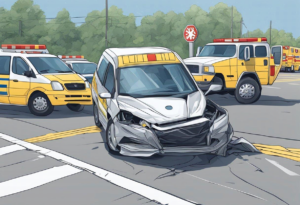
When a car accident upends your wallet and your work life, expect to buckle up for a rollercoaster ride of expenses and job hurdles. Victims often grapple with the high peaks of medical costs and the unpredictable terrain of maintaining employment.
Medical Bill Mountain Climbing
After a car accident, victims may find themselves scaling the steep slopes of medical bills. Initial treatment is just the base camp; ongoing care, physical therapy, and the occasional summit bid for surgeries can inflate expenses faster than a post-accident airbag. A traumatic brain injury, resembling an unexpected overhang, may drastically increase the climbing difficulty, requiring specialized treatment and possible long-term care. Insurance companies play the role of reluctant sherpas, occasionally disputing the need for certain medical services or the degree of pain and suffering, which can leave the injured party dangling on a financial precipice.
- Diagnosis: Every medical condition adds to the expedition’s cost, from X-rays to tests for chronic pain.
- Treatment: Roped together with a team of healthcare professionals, the journey includes various modes of recovery therapy.
- Permanent Disability: If the injury leads to a permanent disability, one might face a financial Everest, needing costly adjustments for day-to-day life and mobility.
Employment Obstacle Course
Navigating the employment landscape after an accident is akin to an obstacle course with a dizzying array of trials and challenges. Return to work? Not so fast. There’s the hurdle of health recovery first, often leading to a loss of income steeper than a slip ‘n slide. Those who face a traumatic brain injury might meet a wall that’s tough to scale, affecting cognitive functions and the ability to perform job duties as before. Plus, there’s the mud pit of dealing with disability claims and proving to insurance companies that one is not quite ready for the career marathon.
- Loss of Income: While healing, the paycheck stream trickles to a stop, a financial drought nobody anticipated.
- Return to Work: Once fit for work, there may be a need to retrain or adjust roles, prompting waves of frustration.
- Compensation and Settlements: Legal wrangling over rightful compensation brings its own set of agility tests, often requiring strong negotiation to reach a settlement finish line that seems to keep moving.
In sum, after a car accident, one might find their bank account in a free fall and their career path looking more like a labyrinth, all while playing a not-so-fun game of tag with bill collectors and insurance agents.