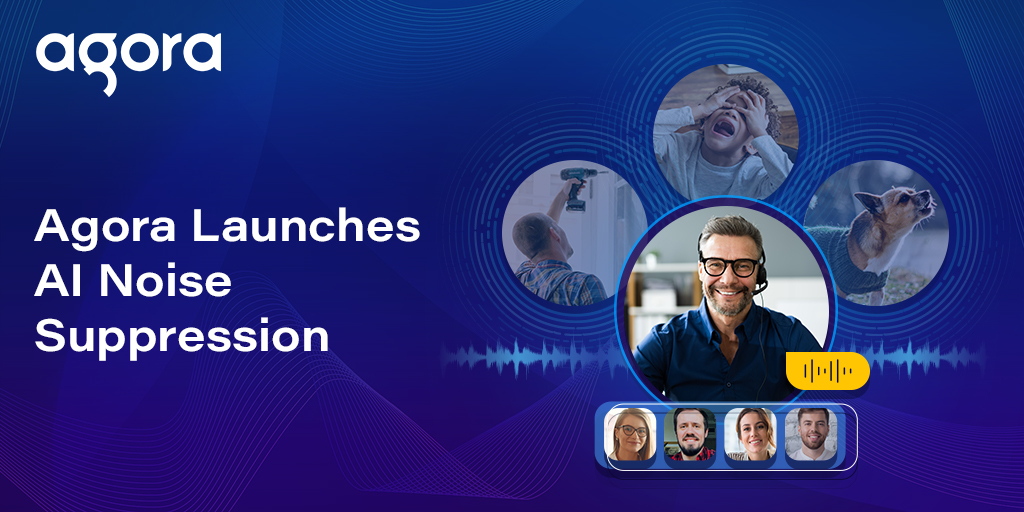
ai noise suppression
Key Takeaways:
- Explore the cutting-edge AI technology behind noise suppression.
- Learn about the diverse applications of noise suppression in different sectors.
- Discover how to select the right AI noise suppression solutions for your needs.
- Understand the current limitations and future potential of noise suppression technologies.
Table of Contents:
- Understanding Noise Suppression
- AI Noise Suppression Mechanisms
- Applications Across Industries
- The User Experience
- Future Trends in Noise Suppression
- Choosing the Right Noise Suppression Solution
- Impact on Remote Work and Learning
- Security and Privacy Considerations
- Limitations and Challenges
- Getting Started with AI Noise Suppression
Understanding Noise Suppression
Managing audio quality during virtual communication is critical today, where remote interactions have become central to our personal and professional lives. Noise suppression technologies are crucial in delivering clear, uninterrupted sound by filtering out background interference, which otherwise masks speech and important acoustic cues. These technologies are becoming indispensable in everyday conversations and scenarios like virtual events, podcasts, and live broadcasts. In defining the critical aspects of why technologies such as those offered by Agora.io are transformative, it becomes clear that the cornerstone of their significance lies in their ability to provide clear and professional communication for users across the globe. An environment without intrusive sounds is not just about convenience but also about the productivity and efficiency of communication, as needed in various industries.
Dealing with the cacophony of daily life, from barking dogs to the hustle and bustle of city streets, can challenge even the best traditional noise cancellation methods. These methods can be static, with preset profiles that might not address the dynamic nature of real-world noise. On the other hand, AI-based noise suppression adapts in real-time and can discern between voice and noise with more precision, significantly improving traditional techniques. This evolution comes as a response to the increasing demands of remote work environments and the need for superior telecommunication systems.
AI Noise Suppression Mechanisms
Delving into the mechanics of AI noise suppression offers a fascinating glimpse into the interplay between software and sound. These advanced systems employ machine learning algorithms trained on vast datasets, allowing them to recognize and differentiate audio signals. From the persistent hum of an air conditioner to the sporadic interruptions of doorbells, AI is adept at reducing or eliminating unwanted noise while preserving the speaker’s voice with its natural tonalities.
This improved acoustic clarity benefits diverse settings, from individual telecommuters seeking professionalism in their home offices to corporations aiming for flawless audio during large-scale virtual conferences.
Applications Across Industries
AI noise suppression technology knows no boundaries regarding its applications across various industries. The online education space sees a notable improvement with AI noise suppression, allowing educators to teach without unwanted interruptions from their environment and providing students with a more focused learning experience. In telehealth, clear communication between healthcare providers and patients can be a matter of life and death. AI noise suppression ensures that every word is heard unambiguously.
Consumer electronics such as smartphones, headphones, and smart speakers increasingly incorporate AI noise suppression algorithms, immediately giving consumers access to high-quality audio experiences. Furthermore, in an unpredictable environment like live streaming, AI noise suppression ensures that content creators can deliver their message without worrying about detrimental sound quality affecting their audience’s engagement.
The User Experience
At the core of successful virtual communication technologies lies a seamless user experience, which heavily hinges on the quality of audio delivered. AI noise suppression directly impacts user satisfaction by fostering more naturalistic interactions, even in less-than-ideal acoustic settings. The frustration of asking others to repeat themselves or the disruption caused by sudden noises can tarnish the user experience. However, these disturbances become non-issues with the integration of robust noise suppression technologies.
Users have expressed substantial appreciation for the ability to communicate in various environments without the usual distractions. This has been particularly liberating for individuals working in shared spaces, as they can contribute to conversations confidently, knowing that their message won’t be lost amidst background sounds.
Choosing the Right Noise Suppression Solution
For individuals and organizations alike, settling on the most appropriate AI noise suppression solution can be influenced by various factors, including compatibility with current software, cost, and the specific environments in which it will be used. Looking beyond the marketing gloss, it’s crucial to scrutinize user reviews, independent benchmark tests, and feature comparison charts to discern the practical efficacy of these technologies under real-world conditions. Businesses should particularly regard the scalability of noise suppression solutions to ensure that as they grow, their communication infrastructure can keep pace.
Impact on Remote Work and Learning
The mass transition to remote work and the rapid adoption of online education have underscored the importance of clear audio. Noise suppression technology not only bolsters professionalism but also democratizes online interactions. Its ability to provide everyone with the opportunity to communicate effectively, regardless of their physical location or the unpredictability of their surroundings, has been a catalyst for equity in digital participation. Academic institutions, businesses, and organizations have recognized AI noise suppression as essential in promoting inclusivity and effective communication.
Security and Privacy Considerations
As more personal and professional conversations migrate to digital channels, the security and privacy parameters surrounding AI noise suppression tools have garnered close scrutiny. Trustworthy service providers are expected to implement stringent security measures to safeguard user data and maintain transparency about their practices. Industry-standard encryption and compliance with regulations like GDPR demonstrate a commitment to protecting user privacy. They should be non-negotiable when selecting AI noise suppression technologies.
Getting Started with AI Noise Suppression
Embracing AI noise suppression for personal or professional use is becoming easier, with many platforms offering intuitive setup processes. As this technology becomes more mainstream, tutorials, customer support, and community forums are readily available to assist users. This ensures that even those new to AI noise suppression can quickly benefit from enhanced audio quality without requiring extensive technical knowledge.