It has never been more critical to have communication systems that work well and are reliable in a world where industries are constantly changing.
In fact, industrial wireless communications have transformed business operations by providing real-time data transmission, connectivity, and automation to optimize productivity and safety. This article will delve into the intricacies of industrial wireless communications.
Types of Industrial Wireless Communications
Wireless Sensor Networks (WSN)
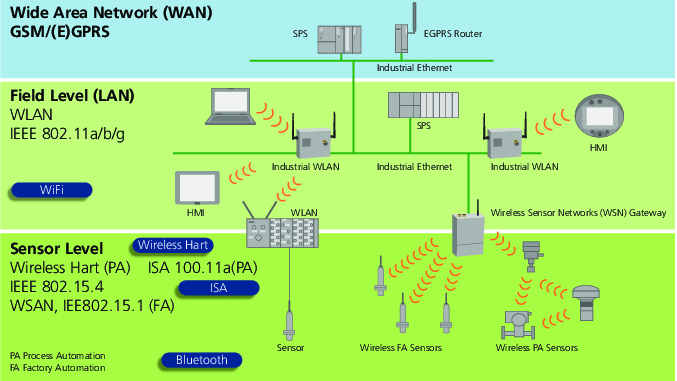
Wireless Sensor Networks (WSN) are like friendly detectives for industries. They use tiny sensors to gather temperature, pressure, or movement information. These sensors communicate wirelessly, creating a network that helps industries keep an eye on things without using many wires. WSNs are handy for monitoring equipment, ensuring it works well, and tracking goods in a warehouse.
Wi-Fi and Bluetooth Technologies
Wi-Fi connects devices within a limited range to a central hub, enabling seamless communication. Bluetooth, on the other hand, links devices directly, like your phone connecting to earphones. Both technologies are widely used in industries for connecting devices, machines, and systems, enhancing communication efficiency.
Radio Frequency Identification (RFID)
Industries use RFID to track products along the production line or monitor equipment. It’s like giving each item its voice, making it easy to identify, locate, and manage assets without manual intervention.
Cellular and Satellite Communications
Cellular networks, similar to your phone’s connection, provide reliable communication over vast areas. At the same time, satellites, orbiting high above, offer global coverage. Industries use these technologies to connect remote sites, ensuring that even the farthest corners of the operation stay in touch, facilitating efficient management and monitoring.
Benefits of Industrial Wireless Communications
Increased Flexibility and Mobility
Industrial wireless communications provide increased flexibility by eliminating the constraints of wired connections. Workers can move freely within the facility without being tethered to fixed locations. This mobility enhances collaboration and allows for quick adaptation to changing work environments.
Enhanced Efficiency and Productivity
Real-time data transmission enables instant decision-making and responsive actions. This efficiency improvement increases overall productivity as operations become smoother and more synchronized. With wireless connectivity, devices and systems communicate seamlessly, minimizing downtime and maximizing the utilization of resources.
Cost Reduction and Scalability
Techuper.com, industrial wireless communications can save a lot of money. Because it does not need complicated wiring installations, it saves money on both materials and labor.
Additionally, wireless systems offer scalability, allowing for easy expansion or modification of the network as the business grows or changes. This adaptability prevents extensive rewiring and infrastructure overhauls, contributing to long-term cost-effectiveness.
Improved Safety and Monitoring
By letting people see what is going on with equipment and the environment in real time, wireless technologies make industrial settings safer. Sensors and cameras can be strategically placed to provide comprehensive coverage, promptly detecting potential hazards or malfunctions. This proactive approach to monitoring enhances worker safety and prevents accidents.
Embrace a Continued Learning and Adaptation in this Dynamic Field
Indeed, it becomes evident that this dynamic field is not just about current technologies but also about embracing continual learning and adaptation. Every day, new technologies, standards, and problems show up in the world of industrial wireless communications.