Serigraphy helps us to decorate a lot of products very nicely, in one or more colors, and in this way, they become more attractive for the public to whom they are addressed, in addition, they will have a greater perceived added value. Whether we are talking about a more attractive design of the products, whether we are talking about branding, or simple industrial markings, screen printing through its versatility offers a multitude of solutions, being one of the most widespread and used printing/personalization technologies globally.
Screen printing is the technology that facilitates us to print on a multitude of support materials, of different chemical compositions and sizes.
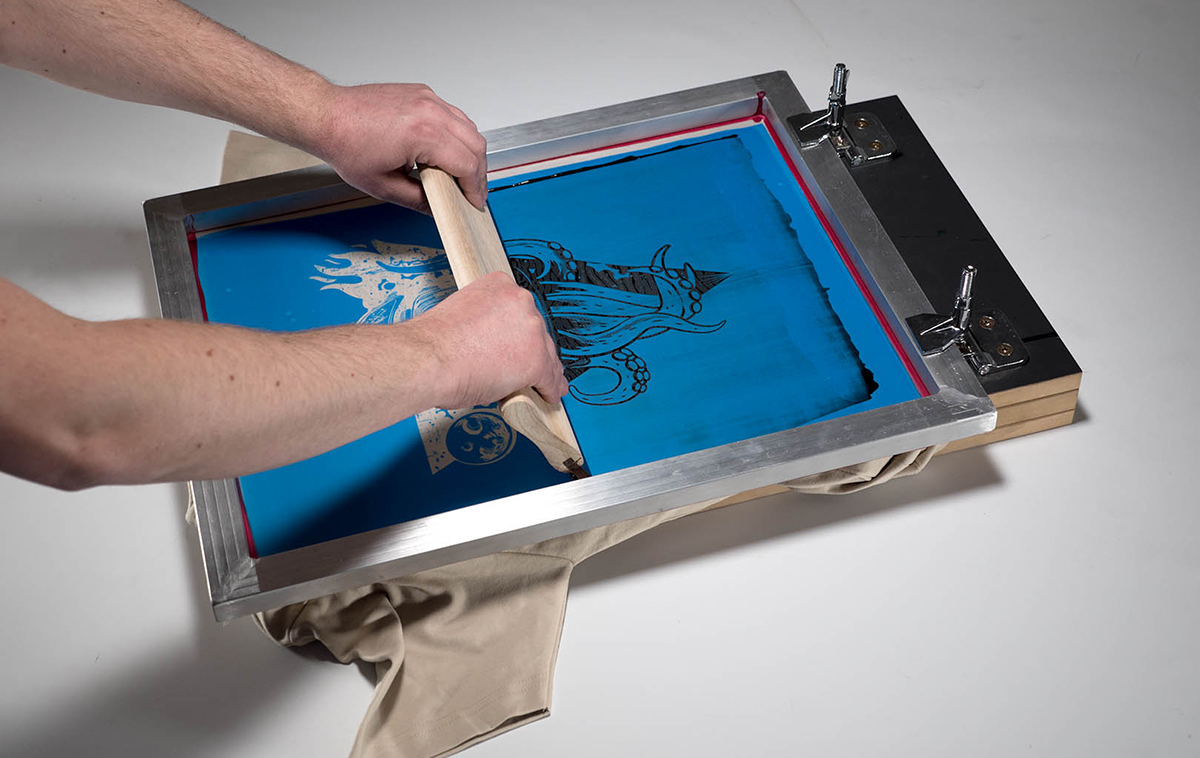
In short, screen printing is done using the screen, which is also known as a silkscreen, and the rubber scraper or roller as it was known in the past. The term “screen printing” comes from the Greek language, and according to some historical sources, screen printing was used in ancient China for silk printing, which has a history of over 2000 years.
In 15th-16th century Europe, this method of printing was spread mainly in England and France, and in the 18th century this art is spread almost in all the countries of Europe, where it was used to decorate: furniture, walls, textiles, metal products
Currently on the world market of consumer goods we can identify an impressive amount of screen-printed promotional products. And we provide silk screen printing service in Dallas.
Currently on the world market of consumer goods we can identify an impressive amount of screen-printed promotional products. Examples of objects that can be screen printed:
- T-shirts
- JACKETS
- Sweatshirts
- caps
- umbrellas
- bags
- backpacks
- pens
- glasses
- JUGS
- BOTTLES
- plates
- control panels of various equipment
- watches
- power banks
- windshields and other glass elements
- trays
Advantages of screen printing:
- High print accuracy
- High print resistance over time
- The versatility of technology
- Reasonable production costs
- High productivity
- Very good opacity – very high ink coverage
Industries that benefit from the contribution of screen printing:
- Advertising industry, packaging industry, automotive, electronics, machine building, textile, printing industry
Types of materials that can be screen printed:
- Cotton, Polyester, PP, PVC, Aluminum, Brass, Stainless Steel, Wood, Paper, Cardboard, Glass
Screen printing of finished textile articles:
The beautiful prints made on t-shirts, blouses, jackets, vests, caps etc. they are mostly made by screen printing with specialized carousel type equipment.
We, at Dallas Shirt Printing, have two such equipments, one is automatic, and with it we can print complex polychromes of up to 8 colors very nicely and quickly, and the second one is manual, and with it we can print images of up to 6 colors . The maximum print format is A3, and the daily production we can achieve is about 3000-4000 prints in 8 colors.
We own 4 such screen printing equipments that allow us to print a multitude of objects of different shapes and sizes.
Screen printing on cylindrical objects:
It finds applicability in the packaging industry, in the food, chemical or pharmaceutical industry, other industrial applications, etc.
Specialized machines are used to print cylindrical objects.
We, Dallas Shirt Printing, own such semi-automatic equipment that allows us to print cylindrical objects, such as glasses, bottles, jars, small bottles, cups, mugs, thermoses, but also industrial applications.
Maximum versatility through Serigraphic transfer technology
This process is used to personalize articles made of cloth, leather or leather substitutes, ensuring their decoration in vibrant colors. Without the help of this precious technology, these objects would be very difficult or impossible to print by means of another technology, either because of the material from which they are made, due to the complexity of the graphic elements to be printed, or because of the shape of these objects. Screen printing thermal transfer customizations are of very good quality ensuring very high printing accuracy and increased resistance over time, with the associated benefits being very good visibility and outstanding impact for the printed brand.
Large format serigraphic printing
It is differentiated by the large printing surface and the appropriate size of the equipment – it exceeds the size of the 70 x 100 cm format.
Technological aspects. Available procedures:
- Direct screen printing: the ink is applied directly to the product through the screen with the help of the squeegee. We have automatic and manual screen printing equipment, which allows us to print very nicely and quickly, up to 8 colours. We can print like this: t-shirts, jackets, caps, umbrellas, card holders, lighters, watches, diaries, stickers, etc.
- Screen printing: Indirect printing technology for clothing or luggage. The logo is silk-screen printed on the transfer paper, and then applied to the product using a heat press. Ex: bags, caps, rucksacks, handbags, jackets etc.
Stages of the technological process:
- choosing the type of screen corresponding to the print to be made;
- stretching the sieve on the frame;
- exposure and development of the screen printing site;
- choice of ink,
- performing assemblies and adjustments
- choosing the printing technique;
- the actual printing;
- drying the print
The thickness of the screen-printed ink layer is between 10/12 microns and can reach up to 500 microns or even more. In comparison, offset printing applies a 1-2 micron thick layer of ink to the paper.