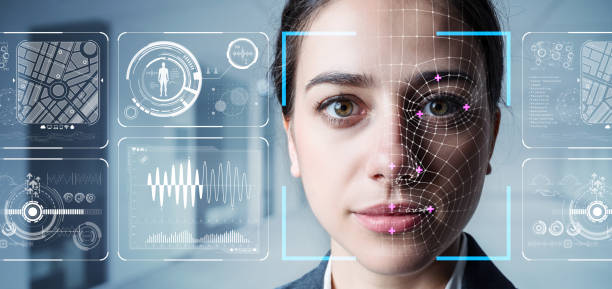
Facial Recognition
In a world where a single glance can both unlock your phone and also grant you access to a different country, the value that your facial data holds is immense. What was just another facial recognition online feature in the past, today controls where we go, how we live, and even the worth of many businesses out there.
So how did all this happen?
Today, biometric facial recognition has woven itself into the very fabric of our lives. However, this technology which today is a marvel of science, that was produced after decades of research, boasts a rich history.
Dawn Of The Facial Recognition Solution
The human fascination with drawings and human faces is as old as civilization itself. While facial hieroglyphs that used to be drawn on caves by ancient people are a good example of this, it might be too early to start with these.
Leonardo da Vinci, the extraordinary polymath, used to sketch intricate facial maps in the 15th century. He was the one who laid the groundwork for scientific study that is commonplace today. Centuries after da Vinci, was Alphonse Bertillon. Bertillon was a French police officer who devised a system for the identification of criminals based on their physical traits. This system, which he referred to as anthropometry, was based on facial measurements and can be considered as the first practical application of the facial recognition process.
The Dawn Of Technology – Going From Pixels to Algorithms
The 20th century brought with it a great technological revolution, and with this revolution came facial recognition. This revolution started with the emergence of automated systems in the 1960s. These systems analyze facial features from still images. By the 1970s, computer vision pioneers such as Helen Green and David Lowe worked on laying the groundwork for the modern algorithms we know today. These algorithms paved the way for the era of face recognition deep learning.
Last Step In The Evolution Of Facial Recognition Process
With Green and Lowe’s setting the foundation for deep learning, over a period of three decades researchers focused on the refining of this technology for the facial recognition process as well as other applications. The end of this dedicated research leads us to a peak in the use of deep learning technology. This rise started in the 21st century and gave us a range of applications. One of these applications was facial recognition algorithms.
Today, facial recognition online algorithms are in active use by many companies from various industries ranging from security to social media. These facial recognition processes take their inspiration from the human brain. Just like our minds, these also attempt to process vast amounts of data as the system tries to learn to discern subtle nuances and to distinguish even identical twins with remarkable accuracy. While technology is still very far from replicating the human brain, we still have come a long way from history. Today, these algorithms are forming the backbone of most modern facial recognition systems.
AI Face Recognition Online: Understanding The Facial Recognition Process
There is extensive processing that goes behind facial recognition. However, for the user, it’s pretty straightforward and effortless. The simple process takes a pathway through the following four steps, in order:
- Capture and Pre-processing
In the first step of the facial recognition process, the software demands the user to submit a live selfie or video shot. The user uses their webcam to capture their face. The system pre-processes the image. Here, the facial recognition technology straightens the shot to improve proportions, adjusts for lighting and contrast, and crops the image to focus on the face.
- Feature Extraction
In the second step of the face recognition, the facial recognition algorithm focuses on the face and facial features. It dissects the facial traits to extract key features like eye distance, nose shape, facial height and depth, and jawline. With this information, the system creates a mathematical representation of the user’s face. This mathematical model is referred to as the “faceprint.”
- Faceprint Matching
After acquiring the faceprint of the particular user, the facial recognition process proceeds as the algorithm compares it to a database of previous faceprints. These databases can be private such as a phone’s gallery (for purposes such as phone unlocking) or public such as law enforcement databases (for criminal prosecution, etc.).
- Verification of Identification
After the system compares the similarities between your faceprint and those in the database, it works out a result. If a close match between the user’s face and another face is found, a positive result occurs (e.g., unlocking your phone, signaling face match, etc.). However, if the algorithm notices no match, then a negative result shows up. If need be, the system may register the new face in the database by asking for relevant information. This is thus the last step of the facial recognition process.
To Sum Up
The facial recognition process has a rich history; however, the story of this facial recognition process is still far from over. Today, advancements in AI artificial intelligence as well as biometrics promise us even greater accuracy and integration with other technologies. To addition, responsible development and stringent and robust regulations are critical. These can help to ensure that this technology serves us for the best. In this way, we can empower individuals to control their own fates and faces in the digital age.