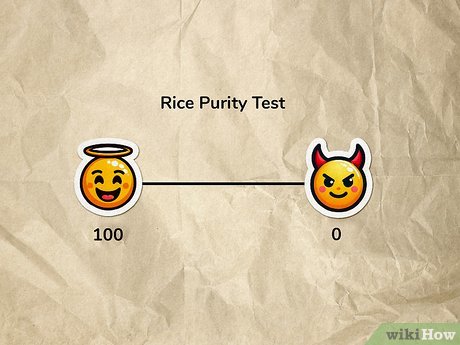
Rice Purity Test
In college students’ and young adults’ bustling social lives, the Rice Purity Test is a cultural staple, measuring experiences and innocence. This seemingly innocent list of 100 yes-or-no questions has become a rite of passage for many. Yet, it embodies a complex intertwining of social norms, mental health, and community dynamics.
Unraveling the threads that tie the Rice Purity Test to the fabric of modern youth culture reveals both exhilaration at shared experiences and the sobering weight of peer evaluation—plus an unexpected ally in the form of introspection.
Join us as we examine the deeper significance of this test, weighing its grains against the broader issues facing today’s young adults. From the test’s humble origins to its blossoming into an online sensation, we’ll explore the nuanced relationship between the Rice Purity Test and those who take it and offer insights on maintaining a balanced perspective in the face of its allure.
Understanding the Rice Purity Test
What is the Rice Purity Test, and why is it giving so many young people a mental workout? The test is a self-reflective questionnaire allegedly originating at Rice University and is designed to quantify ‘innocence’ or accumulated life experiences. Its appeal seems rooted in the human desire to catalog and compare life’s adventures, the ultimate social currency.
A Traditional Tally
The test’s original format of 100 questions has morphed over time and through countless retellings, but the essence remains. It asks respondents about various lifestyle choices and encounters, from the mundane to the taboo. The scored and shared results have become a point of pride or shame, depending on personal and cultural perspectives.
A Barometer of Experience
For generations, the Rice Purity Test has allowed students to compare their life experiences with peers, often revealing the diversity of life paths and common rites of passage. Its online propagation has further globalized this comparison, bringing together an expansive community of participants.
Impact on Mental Health
To many, the test is a lighthearted activity, but as with all measurement systems, it carries the potential for significant impact, particularly on mental health.
The Anxiety of Scoring Highs and Lows
With the pressure to “score” as high or low as possible based on prevailing social significance, some experience anxiety. The test might inadvertently create and exacerbate feelings of inadequacy or FOMO (fear of missing out).
Psychologist’s Perspectives
Professional psychologists weigh in on the test’s implications. Many of them view it as a modern form of self-imposed peer pressure that can lead to stress and anxiety, especially when individuals compare their scores with others in a way that devalues their own life experiences.
Coping with the Test’s Impact
Coping mechanisms for those who find themselves affected include:
- Reframing the test as a silly internet fad.
- Talking about it openly to remove its power.
- Seeking professional mental health support when necessary.
Community and Culture
The test is far from a solitary experience. It intertwines with community dynamics, fueling conversations and communal experiences.
Whispers in the Dorm
The Rice Purity Test finds itself as a fixture in dorm rooms, where discussion and sharing results create a unique form of bonding. It can form intense and immediate connections and foster an environment of openness. However, participation might also feel obligatory, and judgment may lurk around those who opt out.
Cultural Variances
On a larger scale, cultural variances can dramatically shift the test’s weight and significance. What might be seen as extreme in one context could be commonplace in another, leading to disparities in the test’s outcomes and impact.
Tips for a Balanced Perspective
Engaging with the Rice Purity Test can be healthy and enjoyable with the right mindset.
Finding Joy in Sharing Experiences
Instead of focusing on scores, use the test to share life experiences. This can shift the conversation from who has done what to the joy of camaraderie and collective storytelling.
Promoting Inclusivity and Understanding
Actively work to create a space where diverse life experiences are valued and understood. Shifting the narrative from exclusivity to inclusivity can mitigate the test’s potential negative impacts.
Prioritizing Personal Growth
Choose to see the test as a point of reference, not a label. Prioritize personal growth and the richness of lived experiences over a mere calculation.
Conclusion
The Rice Purity Test has many layers, and peeling them back reveals a fascinating fusion of social, cultural, and individual implications. As young people interact with this online phenomenon, promoting an environment where the pursuit of a “purer” or “more experienced” life is not conflated with personal worth is essential.
We encourage a mindful approach towards the test and a wider discussion on youth culture, mental health, and the measurement of life itself. By doing so, we can more effectively foster a supportive, non-judgmental community where every experience is recognized as a grain in the rich tapestry of life. After all, when it comes to truly understanding the value of our experiences, there are more meaningful metrics than those found in a numbered list.





Markon Cedran