There is a specific kind of hunger that only a cold, bright, olive-oil-glossed rice salad can fix. If you have been searching for the best ensalada de arroz near me, you already know the frustrating part: the dish is famous in Spain, yet it hides on menus under half a dozen names, and plenty of places serve a tired scoop of plain rice with a few peas and call it a salad. This guide fixes that problem.
You will learn what a real ensalada de arroz tastes like, how to track one down with your phone in a few minutes, and how to judge a place before you spend money or make the trip. And if the search for the best ensalada de arroz near me comes up empty in your neighborhood, you will also find a classic homemade version below, built the way Spanish home cooks actually make it. For more practical food and lifestyle guides, the team at Jackopose publishes new explainers every week.
What Ensalada de Arroz Actually Is
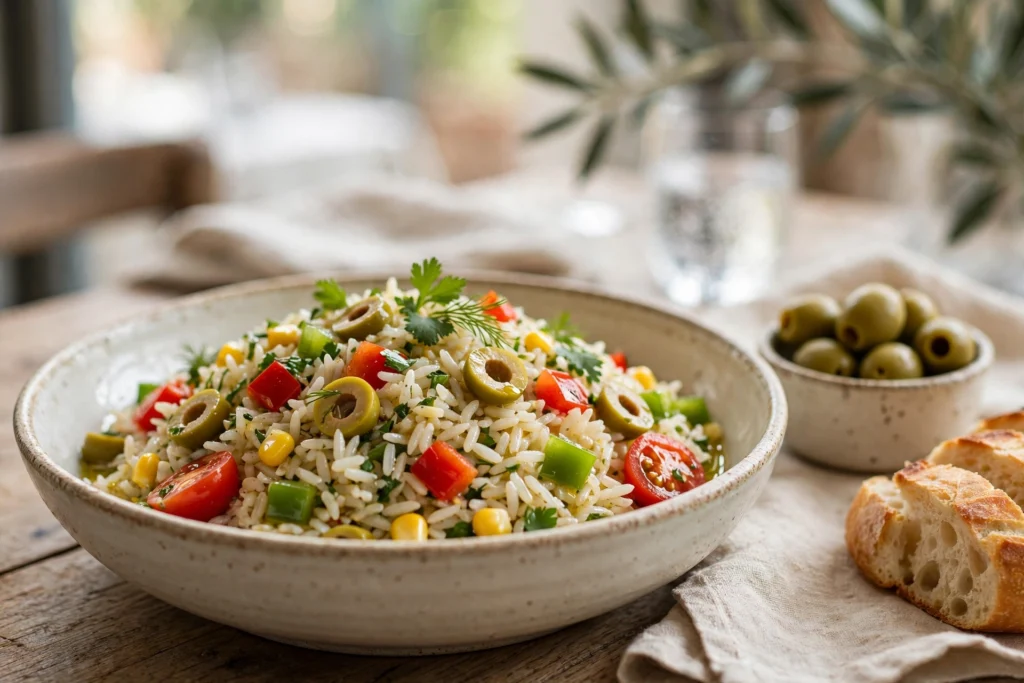
Ensalada de arroz is a Spanish chilled rice salad. At its heart, it is simple: long grain rice cooked until just tender, cooled completely, then tossed with chopped vegetables, olives, and a sharp vinaigrette of extra virgin olive oil and wine vinegar. It is served cold, straight from the refrigerator, which makes it a summer staple across Spain and a year-round favorite at family tables, beach picnics, and tapas bars.
The recipe changes as you travel. In the Canary Islands, a well-known version mixes the rice with red onion, green bell pepper, cherry tomatoes, sliced green olives, sweet corn, and fresh mint, with a whisper of garlic and cumin in the dressing. In southern Spain, cooks fold in cubes of Manchego cheese and Serrano ham with peppers, tomato, and cucumber. Many home kitchens add flaked tuna, hard-boiled egg, carrots, peas, and chopped pickles. None of these versions is wrong. What they share matters more: distinct grains of rice, fresh crunchy vegetables, good olive oil, and enough acidity to keep every bite lively.
How to Find the Best Ensalada de Arroz Near You
Because the dish rarely gets top billing on a menu, finding it is a search skill. Type best ensalada de arroz near me into Google Maps or your favorite maps app and treat the first results as a starting list, not a final answer. Spanish restaurants, tapas bars, Latin delis, and Mediterranean cafés are your most likely sources, and many list the salad only as a daily special or a side. Work through these steps to narrow the list down.
- Search the exact dish name first, then try the variations: “ensalada de arroz,” “Spanish rice salad,” “arroz salad,” and “rice salad” plus the word “Spanish,” because menus translate the name inconsistently.
- Open each promising menu and use the page search on your phone to jump straight to the word “arroz” or “rice salad” instead of scrolling the whole menu.
- Check the salads and starters sections, not the mains. This dish usually lives with the appetizers, tapas, or cold plates.
- Look at the delivery apps you already use. Many small Spanish kitchens list daily cold salads there even when their own website menu is out of date.
- Filter your final list by distance and opening hours, then read the reviews and photos using the checks in the next section before you choose.
- If nobody lists it, call the most authentic Spanish kitchen on your list and ask. Cold rice salad is a common off-menu or rotating special, and a kitchen that makes it will happily tell you which days it appears.
One extra tip: search in the morning. Delis and tapas bars often post the day’s cold specials before lunch service, and a rice salad that is made fresh that day is the one you want. By evening, the best batches are frequently gone.
What to Check in Reviews and Photos Before You Go
Star ratings alone will mislead you with a dish like this, because most reviewers rate the restaurant, not the salad. When you compare reviews for the best ensalada de arroz near me, dig into the details instead. Search the review text for “rice salad,” “arroz,” and “cold salad,” and read what people say about freshness, portion size, and whether the dish tasted seasoned or bland. Recent reviews matter more than old ones, since cooks and suppliers change.
Photos tell you even more. Diners love photographing this salad because it is colorful, so a good listing usually has several close shots. Zoom in. You are looking for separate, glossy grains and a rainbow of chopped ingredients, not a pale mound. Use this quick table while you compare your options.
| What You See | Good Sign | Warning Sign |
|---|---|---|
| Rice texture in photos | Separate grains with a light sheen of oil | Clumped, dry, or mushy-looking rice |
| Vegetables | Several colors: peppers, tomato, olives, corn | Only peas, or vegetables that look gray and tired |
| Dressing | Light vinaigrette gloss, herbs visible | Thick white sauce drowning the bowl |
| Review words | “Fresh,” “tangy,” “homemade,” “huge portion” | “Bland,” “old,” “tasted like plain rice” |
| Menu description | Ingredients are listed in detail | Just “rice salad” with no description at all |
If a place passes the photo test and two or three reviewers mention the salad by name in a happy way, it is worth the trip. If the photos show a sad, beige scoop, keep scrolling. Your time and appetite deserve better.
What Makes a Great Ensalada de Arroz
A great ensalada de arroz is a balance problem solved well. The rice must be cooked just to tender, never soft, and cooled before dressing so the grains stay separate. The vegetables must be cut small and even, so every forkful carries a little of everything. And the dressing must be bold enough to season cold food, because chilling dulls flavor. When any one of those three slips, the salad slides from refreshing to forgettable.
Here is the ingredient lineup behind the versions Spanish cooks return to again and again, and what each part is doing in the bowl. Use it as your quality checklist when you read a menu description or a recipe.
| Ingredient | Role in the Salad | Quality Sign |
|---|---|---|
| Long grain rice | The base; holds the dressing without turning sticky | Cooked al dente and fully cooled before mixing |
| Extra virgin olive oil | Richness and the signature Spanish flavor | Fruity, fresh oil, never a neutral-tasting substitute |
| Wine vinegar or lemon | Brightness that keeps the cold salad lively | A clear tang in every bite, not sourness |
| Bell peppers | Crunch and sweetness, plus color | Finely diced, still crisp, red and green together |
| Green olives | Salty, briny pops of flavor | Firm olives, sliced or halved, generously scattered |
| Tomatoes | Juiciness and acidity | Ripe but firm, added near serving time |
| Corn, peas, or carrots | Sweetness and extra texture | Small amounts for balance, never the main event |
| Tuna, egg, ham, or Manchego | Protein that turns a side into a light meal | Good quality and clearly optional, not filler |
| Fresh herbs | Parsley or mint for a clean finish | Chopped fresh, never dried and dusty |
Notice what is missing from that table: heavy mayonnaise as the main dressing. A spoon of it appears in some family versions, but the classic Spanish approach is a vinaigrette. If a menu describes the salad as creamy, expect a different, heavier dish than the refreshing original.
Questions to Ask Before You Order
When you have found a candidate for the best ensalada de arroz near me, a thirty-second conversation can save you from a disappointing plate.
Staff at small Spanish kitchens are used to these questions, and the answers reveal how seriously the kitchen takes the dish. Ask in person, by phone, or through the delivery app’s notes if that is your only option.
- Is the rice salad made fresh today, or is it a standing item in the cold case?
- What is in your version: tuna, egg, ham, cheese, or vegetables only?
- Is the dressing olive oil and vinegar, or is it mayonnaise based?
- Can I see the portion size, or is it a tapas portion or a full plate?
- Does it contain anything I should know about for allergies, such as egg, fish, or cured pork?
- If it is a rotating special, which day of the week do you serve it?
The answers do double duty. They protect you from surprises, and they tell you whether the kitchen cooks the salad with intention. A place that can describe its own dish in detail almost always makes a better one.
Red Flags That Signal a Mediocre Rice Salad
Some warnings show up before you ever taste a bite. A rice salad that has been sitting for days loses its sparkle: the rice hardens at the edges, the peppers slump, and the whole bowl tastes of refrigerator. If the listing photo shows a salad that looks dry on top or weeping liquid at the bottom, that bowl has been waiting too long, and you should choose somewhere else.
Other red flags are about honesty. A “Spanish rice salad” that turns out to be warm, tomato-sauce rice is a different dish entirely, closer to a paella side than to ensalada de arroz. A version with no olives, no peppers, and no visible herbs is usually plain rice with a new name. And if a menu leans on frozen mixed vegetables as the headline ingredient, expect a flat, watery result. Cold salads forgive nothing, because there is no heat or sauce to hide behind. Choose the kitchen that respects that.
A Classic Homemade Ensalada de Arroz When Nothing Is Nearby
Sometimes the honest answer is that no kitchen near you serves this salad the right way. That is fine. Ensalada de arroz began as home cooking, and a classic batch takes about half an hour of work plus chilling time. This version follows the Canary Islands style, with the southern additions noted so you can steer it toward your own taste. It serves four as a side or two as a light main dish.
You will need 1 cup of long grain rice, a third of a cup of finely chopped red onion, half a cup of diced green bell pepper, about ten cherry tomatoes quartered, half a cup of sliced pitted green olives, half a cup of drained sweet corn, and a handful of chopped fresh mint or parsley. For the dressing, whisk 3 tablespoons of extra virgin olive oil with 1 tablespoon of white wine vinegar, a small grated garlic clove, half a teaspoon of ground cumin, salt, and black pepper. Optional additions in the southern style are small cubes of Manchego cheese or Serrano ham, or keep it simple with flaked tuna and a chopped hard-boiled egg.
- Rinse the rice, then cook it in salted water until just tender, about 15 minutes. Drain any excess water, spread it on a tray, and let it cool completely so the grains stay separate.
- While the rice cools, chop the vegetables into small, even pieces. Small cuts mean every forkful tastes complete instead of random.
- Whisk the dressing ingredients together in a small bowl and taste it. It should seem slightly too sharp on its own, because cold rice will soften the edges.
- Combine the cooled rice, vegetables, olives, corn, and herbs in a large bowl. Pour the dressing over and fold gently with a wide spoon so you do not break the grains.
- Cover and refrigerate for at least 1 hour. This rest is not optional; it is when the flavors marry and the salad becomes itself.
- Taste again before serving, adjust the salt and vinegar, and add the tomatoes and any cheese, ham, tuna, or egg at the end so they stay fresh and distinct.
Leftovers keep well for a day in the refrigerator and travel happily to picnics and potlucks, which is exactly why Spanish families have made this salad for generations. Make it once and you will understand what you were hunting for.
Quick Checklist Before You Order or Make It
Whether you are judging the best ensalada de arroz near me at a restaurant or standing in your own kitchen, the standards are the same. Run through this list and you will rarely be disappointed.
- ☐ The rice is long grain, cooked just tender, and served fully chilled
- ☐ The dressing is olive oil and vinegar, glossy rather than creamy
- ☐ At least three vegetables add color and crunch
- ☐ Olives are present, because their brine is part of the signature flavor
- ☐ Photos or reviews confirm the salad is made fresh, not stored for days
- ☐ You know the portion size and the protein additions before paying
- ☐ For the homemade version, you have allowed a full hour of chilling time
FAQs
Is ensalada de arroz the same as Mexican or Spanish rice?
No. The rice dishes served warm beside tacos or grilled meats are cooked in seasoned broth and eaten hot. Ensalada de arroz is a cold salad: plain-cooked rice, chopped vegetables, olives, and a vinaigrette, served chilled like a potato salad.
What should I search if the dish name finds nothing near me?
Try “Spanish rice salad,” “ensalada de arroz,” and the names of Spanish or tapas restaurants in your area, then check their starter and salad sections. Also ask directly. Many kitchens make it as a rotating special or will prepare a batch on request for catering orders.
How long does homemade ensalada de arroz keep in the fridge?
About one day at its best, and up to two days if it is stored in a sealed container and kept properly cold. The rice firms up over time, so let the salad sit at room temperature for a few minutes before serving leftovers, and refresh it with a squeeze of lemon or a drizzle of olive oil.
Conclusion
The hunt is worth it. A proper ensalada de arroz is fresh, tangy, and deeply satisfying in a way few cold dishes manage, and now you know how to find it: search smart, read reviews for the right words, study the photos, and ask the kitchen a question or two. When the best ensalada de arroz near me turns out to be the one cooling in your own refrigerator, that counts as a win too, because you made it the classic way.