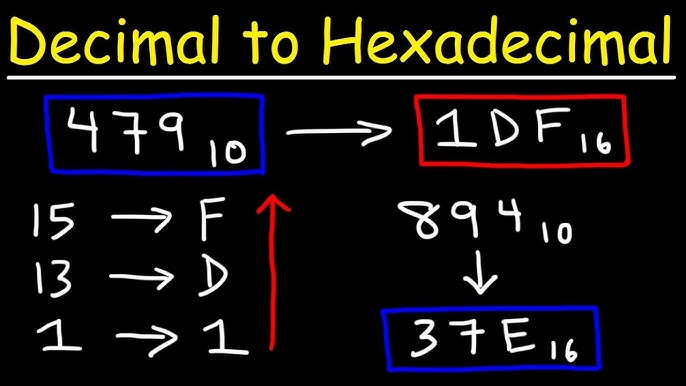
In the world of building automation, Niagara 4 Tridium is a powerful platform that enables seamless integration and control of various systems. Converting decimal values to hexadecimal (hex) is a common requirement for developers and engineers working with this platform, especially when handling device communications, protocols, or specific configurations.
If you’re scratching your head about how to use a decimal to hex converter in Niagara 4 Tridium, don’t worry! This guide will walk you through everything, from understanding the concept to implementing it efficiently.
What is a Decimal to Hex Converter?
Understanding Decimal and Hexadecimal
- Decimal System: The base-10 system that we use in everyday life. It consists of digits from 0 to 9.
- Hexadecimal System: A base-16 system using digits 0-9 and letters A-F to represent values.
A decimal to hex converter translates numeric values from the decimal system to the hexadecimal system, making it easier to work with memory addresses, device registers, and low-level communications in systems like Niagara 4 Tridium.
Why Use Decimal to Hex Conversion in Niagara 4 Tridium?
Key Applications
- Device Communication: Many devices in Niagara 4 operate using hexadecimal values, requiring conversion for proper communication.
- Protocol Configuration: Protocols like Modbus or BACnet often use hex for addressing and commands.
- Efficient Data Representation: Hexadecimal is more compact and easier to interpret in certain contexts compared to decimal.
Real-World Example
Suppose you’re configuring a Modbus device. You need to send a specific address or value in hex format. Without conversion, you might struggle to represent these values correctly.
How to Implement a Decimal to Hex Converter in Niagara 4 Tridium
Using Niagara 4 Built-In Tools
Niagara 4 provides several built-in tools and functions to handle numerical conversions.
Steps to Convert Decimal to Hex:
- Access the Workbench: Open Niagara 4 Workbench and navigate to your project.
- Use the Math Toolkit: In the
MathorLogicsection, use built-in components to perform conversions. - Integrate in Workflows: Use the result of the conversion directly in your logic or scripts.
Writing Custom Scripts
If you need more flexibility, you can write custom scripts in Niagara 4’s BQL (Building Query Language) or Python.
Example Script:
This can be adapted for use in Niagara 4 workflows.
Utilizing External Libraries
You can integrate external libraries or converters using Niagara 4’s extensibility features. This approach works well for large-scale or complex projects.
Examples of Decimal to Hex Conversion
Simple Conversion Table
| Decimal Value | Hexadecimal Equivalent |
|---|---|
| 10 | A |
| 255 | FF |
| 1024 | 400 |
| 4096 | 1000 |
Practical Scenario in Niagara 4
Let’s say you need to configure a BACnet device with a decimal instance number of 12345. Using a converter, the hex value would be 3039, which you can directly input into the configuration.
Common Challenges and Solutions
Challenge 1: Incorrect Conversion
- Issue: Decimal values might not convert correctly due to syntax errors.
- Solution: Double-check the format and use verified tools.
Challenge 2: Device Miscommunication
- Issue: Hex values might not align with device expectations.
- Solution: Consult device documentation and ensure accurate addressing.
Challenge 3: Integration Issues
- Issue: Difficulty incorporating conversions into workflows.
- Solution: Utilize Niagara 4’s support resources or forums for guidance.
Benefits of Using Hexadecimal in Niagara 4
Enhanced Efficiency
Hexadecimal representation reduces the complexity of data management, especially for memory allocation and device registers.
Improved Accuracy
Since hex values align with low-level protocols, the chances of errors decrease significantly.
Easier Debugging
Debugging device communications becomes simpler when working with hexadecimal, thanks to its compact and recognizable format.
FAQs
1. What is the easiest way to perform decimal to hex conversion in Niagara 4 Tridium?
Using Niagara 4’s built-in Math Toolkit or writing a small script are the simplest ways.
2. Why is hexadecimal important in building automation systems?
Hexadecimal provides a compact, efficient, and widely understood format for data representation, particularly in communication protocols.
3. Can I automate decimal to hex conversion in Niagara 4 workflows?
Yes, you can automate the process by scripting or integrating conversion logic into your workflows.
4. Are there external tools for decimal to hex conversion compatible with Niagara 4?
Yes, external libraries and APIs can be integrated with Niagara 4 to enhance functionality.
5. Does Niagara 4 support other numerical conversions?
Yes, Niagara 4 supports various numerical conversions, including binary, octal, and hexadecimal.
Conclusion
The decimal to hex converter in Niagara 4 Tridium is an indispensable tool for developers and engineers working in the building automation field. Whether you’re configuring devices, debugging systems, or optimizing workflows, understanding decimal-to-hex conversion ensures smoother operations and better outcomes.
By leveraging built-in tools, writing custom scripts, or integrating external libraries, you can master decimal-to-hex conversion in no time! Got more questions? Check the FAQs or dive into the Niagara 4 documentation for advanced tips.